CO2 Compliance for Convenience Stores: A Quick Guide

Carbon dioxide (CO2) plays an important role in convenience stores, particularly those offering fountain drinks, frozen beverages, and other carbonated products. While CO2 is essential for these systems, leaks from storage tanks, beverage lines, or equipment connections can create serious safety hazards for employees and customers.
Convenience stores often operate in compact spaces with limited storage and ventilation, making proper CO2 monitoring and safety precautions especially important.
Whether you're operating a single convenience store, managing a gas station with beverage service, or overseeing a nationwide chain, understanding CO2 safety and fire code compliance is an important part of maintaining a safe environment.
This quick guide covers common CO2 hazards, monitoring requirements, and practical steps convenience store operators can take to maintain safety and compliance.
Where Is CO2 Used in Convenience Stores?
CO2 is commonly used in several convenience store applications, including:
- Fountain beverage systems: CO2 carbonates water used in self-service soft drink dispensers.
- Frozen carbonated beverages: Certain frozen drink machines use CO2 as part of the beverage dispensing process.
- Bulk CO2 storage: Larger tanks supply CO2 to beverage equipment throughout the store.
- Backroom equipment: CO2 cylinders, regulators, piping, and connections may be located in storage rooms, utility closets, or other confined areas.
CO2 leaks can occur at tanks, fittings, regulators, and beverage lines, particularly when equipment is damaged, improperly connected, or poorly maintained.
Because CO2 is colorless and odorless, a leak may go unnoticed without appropriate detection equipment. CO2 is also denser than air and can accumulate in low-lying or poorly ventilated spaces, potentially creating hazardous conditions.
What Are the CO2 Monitoring Requirements?
The International Fire Code (IFC) establishes safety requirements for certain CO2 systems, including those commonly found in convenience stores.
Depending on the applicable code edition, system configuration, and local jurisdiction, requirements may include:
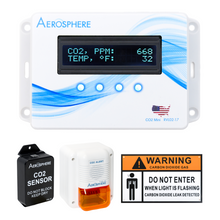
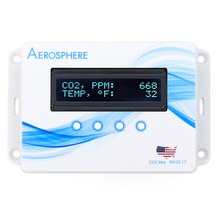
- CO2 detection: Fixed monitoring systems that continuously measure CO2 concentrations in designated areas.
- Audible and visual alarms: Devices that alert employees and occupants when CO2 concentrations reach specified alarm thresholds.
- Sensor placement: CO2 sensors typically installed within 12 inches of the floor in areas where CO2 may accumulate.
- Safety signage: Warning signs identifying CO2 hazards and communicating appropriate safety precautions.
- Automatic shutoff controls: Equipment that can stop the CO2 supply when certain alarm conditions are reached.
- Permitting: Construction or operational permits for qualifying CO2 systems, as determined by the local Authority Having Jurisdiction (AHJ).
Commonly referenced IFC alarm thresholds for applicable beverage CO2 systems include:
| CO2 Concentration | Typical Response |
|---|---|
| 5,000 ppm (0.5%) | Supervisory notification |
| 15,000 ppm (1.5%) | Intermediate alarm where configured |
| 30,000 ppm (3.0%) | High-level alarm and occupant warning |
Actual alarm settings and required system responses depend on the applicable code and installation. The 15,000 ppm intermediate alarm is not a universal IFC requirement.
Even where CO2 monitoring is not explicitly required by local regulations, installing appropriate detection and safety equipment can help reduce the risk of an undetected leak.
What Does a CO2 Safety System Typically Include?
A properly designed CO2 safety system helps detect elevated CO2 concentrations and alert employees before conditions become more dangerous.
CO2 Monitors and Sensors
Fixed CO2 monitors continuously measure concentrations in designated areas. In convenience stores, sensors may be needed near bulk CO2 tanks, beverage equipment, or other areas where gas could accumulate.
Audible and Visual Alarms
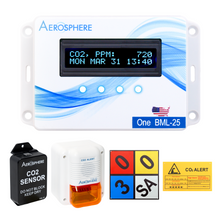
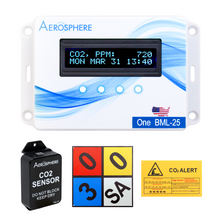
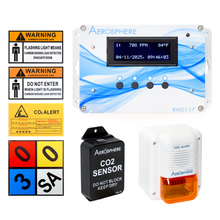
Warning devices notify employees when elevated CO2 concentrations are detected. Depending on the installation, alarms may be located inside and outside storage areas to help prevent employees from entering hazardous spaces.
Safety Signage
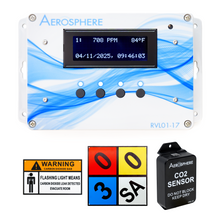
Clearly displayed warning signs identify CO2 hazards and communicate appropriate safety precautions near storage areas and other designated locations.
Automatic Shutoff Valves
Where appropriate or required, automatic shutoff valves can stop the CO2 supply when specified alarm conditions are reached, helping limit additional gas release.
Power Supervision
Power supervision equipment can provide a trouble notification when electrical power to the CO2 monitoring system is interrupted, helping personnel identify a potential loss of monitoring protection.
The equipment needed depends on the store's layout, CO2 storage arrangement, beverage equipment, and applicable safety requirements.
CO2 Safety Considerations for Convenience Stores
Convenience stores present several unique challenges when it comes to CO2 safety.
Limited Storage Space
CO2 tanks and beverage equipment are often installed in small backrooms or utility closets. These spaces may have limited ventilation, increasing the importance of appropriate monitoring and leak prevention.
Self-Service Beverage Stations
Unlike traditional restaurants, many convenience stores allow customers to dispense their own beverages. While the CO2 supply may be located in a separate storage area, operators should also consider potential leak points near beverage dispensing equipment.
Extended Operating Hours
Many convenience stores operate late into the night or 24 hours a day. CO2 monitoring systems provide continuous detection, including during periods when fewer employees are present.
Multi-Location Operations
Convenience store chains may operate across multiple jurisdictions with different fire code requirements. Establishing consistent safety practices can help simplify equipment maintenance, permitting, and inspection scheduling.
Equipment Changes and Renovations
Adding fountain drink stations, relocating CO2 tanks, or modifying beverage systems may affect monitoring coverage or trigger additional permitting requirements.
CO2 Permitting and Inspections
Convenience stores with qualifying CO2 systems may need permits and inspections from their local fire department or other governing authority.
The process typically involves:
-
Evaluating the store's CO2 equipment and facility layout.
-
Preparing plans identifying CO2 storage, monitoring equipment, and associated safety devices.
-
Submitting documentation to the appropriate AHJ.
-
Installing or updating equipment as needed.
-
Completing required inspections and obtaining approval.
Requirements vary by jurisdiction, so stores operating under the same brand may have different permitting and inspection obligations.
For new convenience store construction or renovations, addressing CO2 monitoring requirements early can help prevent delays during final inspections.
Maintaining CO2 Safety Over Time
Installing a CO2 monitoring system is only one part of maintaining a safe convenience store.
Regular inspections, testing, and maintenance help ensure that safety equipment continues to function as intended.
Recommended practices include:
- Testing CO2 monitors and alarm devices for proper operation.
- Calibrating CO2 sensors according to manufacturer recommendations and applicable requirements.
- Inspecting tanks, regulators, fittings, and beverage lines for leaks or damage.
- Keeping warning signs visible and unobstructed.
- Training employees to recognize CO2 alarms and follow appropriate emergency procedures.
- Maintaining records of inspections, testing, and maintenance.
Where required by the applicable fire code, CO2 detection systems must undergo periodic inspection, testing, and calibration, including annual servicing under applicable IFC provisions.
Even where annual recertification is not explicitly required, routine maintenance remains an important part of maintaining CO2 safety.
How Aerosphere Can Help
Aerosphere provides CO2 monitoring equipment and compliance services for convenience stores, gas stations, and multi-location retail operators.
Whether you're opening a new store, upgrading an existing beverage system, or managing CO2 safety across an entire chain, our team can assist with:
- CO2 monitoring systems and safety equipment
- Site evaluations and system design
- Fire department permitting and coordination
- Professional installation
- Inspection support
- Annual recertification, testing, and maintenance
- Multi-location compliance planning
Our goal is to help convenience store operators simplify CO2 safety and compliance while maintaining consistent protection across their locations.
Have questions about CO2 monitoring or compliance at your convenience stores?
Contact Aerosphere to learn more about CO2 monitoring systems, permitting, and compliance services. Or view our industry page for convenience stores to learn more.