CO2 Compliance for Grow Houses: A Quick Guide

Carbon dioxide (CO2) plays an important role in indoor agriculture, where controlled CO2 enrichment is commonly used to support photosynthesis and improve plant growth. While elevated CO2 concentrations can benefit plants under appropriate growing conditions, excessive levels can create serious safety hazards for employees and other occupants.
Unlike many commercial applications, grow houses may intentionally release CO2 into cultivation areas. This makes proper monitoring, ventilation, and safety controls especially important.
Whether you're operating a commercial greenhouse, indoor cannabis cultivation facility, or another controlled-environment agricultural operation, understanding CO2 safety and fire code compliance is essential to maintaining a safe facility.
This quick guide covers common CO2 hazards, monitoring requirements, and practical steps grow house operators can take to maintain safety and compliance.
Where Is CO2 Used in Grow Houses?
CO2 is commonly used in controlled-environment agriculture to supplement the carbon dioxide naturally present in the air.
Common applications and equipment include:
- CO2 Enrichment Systems: Controlled CO2 injection increases concentrations in cultivation areas to support plant growth.
- Bulk CO2 Storage: Large tanks supply CO2 to enrichment equipment throughout the facility.
- Compressed Gas Cylinders: Smaller cultivation operations may use individual CO2 cylinders or cylinder banks.
- CO2 Distribution Systems: Regulators, piping, valves, and injection equipment distribute CO2 to designated growing areas.
- Environmental Controls: CO2 enrichment equipment may be integrated with climate control systems to regulate concentrations during growing cycles.
Although CO2 enrichment systems are designed to maintain controlled concentrations, leaks, equipment malfunctions, or improper operation can result in excessive CO2 accumulation.
Because CO2 is colorless and odorless, dangerous concentrations may go unnoticed without appropriate detection equipment. CO2 is also denser than air and can accumulate in low-lying or poorly ventilated areas.
What Are the CO2 Monitoring Requirements?
The International Fire Code (IFC) establishes safety requirements for certain CO2 storage and enrichment systems, including those used in indoor cultivation facilities.
Requirements depend on the applicable code edition, CO2 system configuration, and local Authority Having Jurisdiction (AHJ).
For qualifying CO2 enrichment applications, requirements may include:
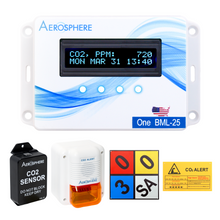
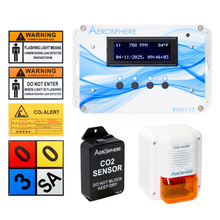
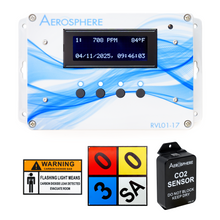
- CO2 Detection: Fixed monitoring systems that continuously measure CO2 concentrations in cultivation, storage, and other designated areas.
- Audible and Visual Alarms: Warning devices that notify occupants when CO2 concentrations reach specified alarm thresholds.
- Sensor Placement: CO2 sensors installed in areas where gas may accumulate, typically within 12 inches of the floor for applicable IFC detection systems.
- Safety Signage: Warning signs identifying CO2 hazards and communicating appropriate safety precautions.
- Automatic Shutoff Controls: Valves or other devices that stop the CO2 supply when specified alarm conditions are reached.
- Ventilation: Systems that help prevent dangerous CO2 accumulation and may activate automatically when elevated concentrations are detected.
- Permitting: Construction or operational permits for qualifying CO2 storage and use systems.
For certain CO2 enrichment systems covered by IFC Section 5307.4, commonly referenced alarm thresholds and responses include:
| CO2 Concentration | Typical Response |
|---|---|
| 5,000 ppm (0.5%) | Supervisory alarm, CO2 supply shutoff, and ventilation activation |
| 15,000 ppm (1.5%) | Intermediate alarm where configured |
| 30,000 ppm (3.0%) | High-level alarm and occupant evacuation warning |
These responses depend on the adopted code edition and system design. The 15,000 ppm intermediate alarm is not a universal IFC requirement.
Even where CO2 monitoring is not explicitly required by local regulations, implementing appropriate detection, ventilation, and automatic shutoff controls can help protect employees from excessive CO2 exposure.

What Does a Grow House CO2 Safety System Typically Include?
A properly designed CO2 safety system helps detect elevated concentrations, alert employees, and control the release of CO2 when unsafe conditions occur.
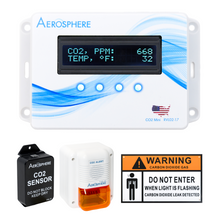
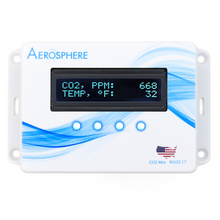
CO2 Monitors and Sensors
Fixed CO2 monitors continuously measure concentrations in designated areas. Depending on the facility layout, multiple sensors may be needed to monitor cultivation rooms, bulk storage areas, and other locations where CO2 could accumulate.
Safety monitoring should be distinguished from environmental CO2 controllers used to regulate plant growth. Equipment intended for cultivation control may not provide the alarms, reliability, or safety functions required for hazardous gas detection.
Audible and Visual Alarms
Warning devices alert employees when elevated CO2 concentrations are detected. Depending on the installation, alarms may be positioned inside and outside cultivation rooms to help prevent employees from entering hazardous areas.
Safety Signage
Clearly displayed warning signs identify CO2 hazards and communicate appropriate safety precautions near cultivation areas, storage rooms, and other designated locations.
Automatic Shutoff Valves
Automatic shutoff valves can stop the CO2 supply when specified alarm conditions occur, helping prevent additional gas from entering affected areas.
For applicable enrichment systems, automatic shutoff may be required at the supervisory alarm threshold.
Ventilation Systems
Ventilation helps remove accumulated CO2 from cultivation areas and other enclosed spaces.
Where required, CO2 monitoring equipment can activate ventilation systems when concentrations exceed specified thresholds.
Power Supervision
Power supervision equipment can provide a trouble notification when electrical power to the CO2 monitoring system is interrupted, helping personnel identify a potential loss of monitoring protection.
The appropriate equipment configuration depends on the facility layout, enrichment system, ventilation design, and applicable safety requirements.
Unique CO2 Safety Considerations for Grow Houses
Indoor cultivation facilities present several CO2 safety challenges that differ from traditional beverage dispensing operations.
Intentional CO2 Enrichment
Grow houses intentionally increase CO2 concentrations to support plant growth.
While enrichment systems may operate above normal atmospheric concentrations, operators must ensure that CO2 levels remain within appropriate limits and that safety systems respond to excessive concentrations.
Multiple Cultivation Rooms
Larger facilities may have several independently controlled growing rooms, each with its own CO2 distribution and environmental controls.
Monitoring coverage should account for individual rooms, potential leak points, and areas where CO2 could accumulate.
Ventilation and Environmental Controls
Grow houses often maintain carefully controlled temperature, humidity, and airflow conditions.
Because ventilation can affect cultivation conditions, CO2 safety systems should be coordinated with environmental controls to ensure that safety functions take priority when hazardous concentrations are detected.
CO2 Storage and Distribution
Bulk CO2 tanks, cylinders, regulators, and piping introduce potential leak points throughout the facility.
Regular inspections and proper equipment installation help reduce the risk of uncontrolled CO2 releases.
Employee Training
Employees should understand the difference between normal CO2 enrichment and potentially hazardous concentrations.
Training should include recognizing alarms, following evacuation procedures, reporting equipment problems, and avoiding entry into areas where dangerous CO2 levels may be present.
CO2 Permitting and Inspections
Grow houses with qualifying CO2 storage or enrichment systems may need permits and inspections from their local fire department or other governing authority.
The process typically involves:
- Evaluating the facility's CO2 storage, enrichment equipment, and layout.
- Identifying areas requiring CO2 detection, ventilation, and automatic shutoff controls.
- Preparing plans and documentation for the applicable AHJ.
- Installing or modifying safety equipment as needed.
- Completing required inspections and obtaining approval.
Additional requirements may apply depending on the type of cultivation operation, CO2 storage quantities, building occupancy, and local regulations.
For new cultivation facilities or expansions, addressing CO2 safety during the design phase can help avoid costly modifications and delays during final inspections.
Maintaining CO2 Safety Over Time
Installing CO2 monitoring equipment is only one part of maintaining a safe cultivation facility.
Routine inspections, testing, calibration, and employee training help ensure that safety systems continue to function properly.
Recommended practices include:
- Testing CO2 monitors and alarm devices for proper operation.
- Calibrating CO2 sensors according to manufacturer recommendations and applicable requirements.
- Verifying that automatic shutoff valves operate correctly.
- Testing ventilation activation and other connected safety controls.
- Inspecting CO2 tanks, regulators, piping, and fittings for leaks or damage.
- Keeping warning signs visible and unobstructed.
- Training employees to recognize CO2 alarms and follow emergency procedures.
- Maintaining records of inspections, testing, calibration, and maintenance.
Where required by the applicable fire code, CO2 detection systems must undergo periodic inspection, testing, and calibration, including annual servicing under applicable IFC provisions.
Even where annual recertification is not explicitly required, routine maintenance remains an important part of maintaining CO2 safety.
How Aerosphere Can Help
Aerosphere provides CO2 monitoring equipment and compliance services for indoor cultivation facilities, commercial greenhouses, and other controlled-environment agricultural operations.
Whether you're opening a new grow house, expanding cultivation operations, or evaluating the safety of an existing facility, our team can assist with:
- CO2 monitoring systems and safety equipment
- Site evaluations and system design
- Fire department permitting and coordination
- Professional installation
- Inspection support
- Annual recertification, testing, and maintenance
- Multi-zone CO2 monitoring solutions
Our goal is to help cultivation operators implement appropriate CO2 safety measures, protect employees, and navigate applicable compliance requirements.
Have questions about CO2 monitoring or compliance at your cultivation facility?
Contact Aerosphere to learn more about CO2 monitoring systems, permitting, and compliance services. Or view our industry page for grow houses to learn more.