CO2 Compliance in California: What Businesses Need to Know

Businesses throughout California use bulk CO2 for beverage dispensing, brewing, indoor agriculture, food processing, and other commercial applications. Depending on the facility, storing and using CO2 can introduce monitoring, permitting, inspection, and environmental reporting requirements.
Navigating those requirements can be complicated. California establishes statewide requirements, while local fire departments and Authorities Having Jurisdiction (AHJs) oversee many aspects of permitting and enforcement.
For businesses using bulk CO2, compliance may involve more than installing a monitor. It can include system design, permitting, professional installation, CERS reporting, final inspections, and ongoing annual testing.
CO2 Monitoring Requirements in California
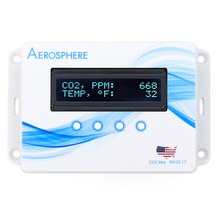
Fixed CO2 monitoring systems are designed to detect dangerous CO2 accumulation and activate the appropriate safety measures.
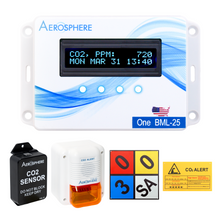
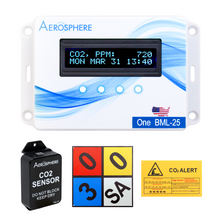
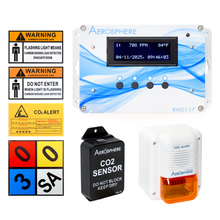
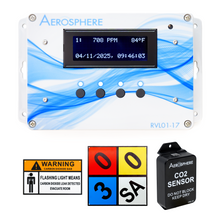
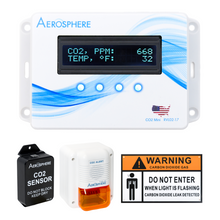
Depending on the application and local requirements, a commercial CO2 safety system may include:
- Fixed CO2 detection
- Audible and visual alarms
- Emergency CO2 shutoff
- Ventilation controls
- Power supervision
- Safety signage
- Proper sensor and alarm placement
The requirements can also change depending on how CO2 is being used. A restaurant using bulk CO2 for beverage dispensing, for example, presents a different application than an indoor grow facility intentionally releasing CO2 into a space.
This is why the complete system must be designed around both the facility and the applicable requirements, not simply the specifications of the CO2 monitor.
CO2 Permitting in California
California CO2 projects are typically reviewed and enforced by the local Authority Having Jurisdiction (AHJ). This can create differences in permitting procedures, plan review, documentation, inspections, and local requirements from one jurisdiction to another.
A typical Aerosphere project can include:

Aerosphere manages this process for businesses throughout California, including permit preparation and submission, AHJ coordination, professional installation, and final inspection support.
For multi-location businesses, this is particularly important. A system approved at one California location should not automatically be assumed to satisfy the requirements of another jurisdiction.
CERS and CO2 Reporting in California
California businesses may also encounter requirements through the California Environmental Reporting System (CERS).
CERS is part of California's Unified Program and provides the statewide system for electronically submitting regulated facility and hazardous materials information. The underlying requirements include California's Hazardous Materials Business Plan (HMBP) laws under Health and Safety Code Sections 25500–25519 and Unified Program requirements under Health and Safety Code Section 25404.
For facilities subject to these requirements, compliance can involve chemical inventory information, facility information, emergency planning documentation, site mapping, and electronic reporting.
Aerosphere's CERS program helps businesses manage:
- Documentation
- Emergency Site Mapping
- CERS Submission
- Inspection Readiness
- Annual Renewal
This can be especially valuable for businesses already managing CO2 monitoring, fire department permitting, and other compliance responsibilities.
Learn more about Aerosphere's CERS services →

CO2 Compliance for Restaurants, Beverage Systems & Grow Facilities
Restaurants, convenience stores, breweries, bars, entertainment venues, and other businesses commonly store bulk CO2 for beverage dispensing. Fixed monitoring provides continuous detection in areas where a leak could allow CO2 to accumulate.
Indoor agriculture presents a different challenge. Because some grow operations intentionally release CO2 into occupied spaces, monitoring may need to interact with automatic shutoff, ventilation, and alarm systems based on the requirements applicable to the facility.
Understanding these differences is an important part of designing the right CO2 safety system.
Annual CO2 Recertification in California
Compliance doesn't end after the final inspection.
CO2 detection systems need to remain operational, properly calibrated, and ready to perform when needed. Ongoing service can include system inspection, functionality testing, sensor calibration, equipment maintenance, and documentation.
Aerosphere provides annual CO2 testing and recertification services throughout California to help businesses keep their systems operational and inspection-ready.
One Partner for California CO2 Compliance
From a single restaurant to a multi-location operation, California CO2 compliance can involve several interconnected responsibilities.
Aerosphere provides CO2 monitoring equipment, system design, permitting, professional installation, CERS support, final inspection assistance, annual recertification, and ongoing service throughout California.
Instead of coordinating multiple vendors for different parts of the process, businesses can work with one team from the initial evaluation through ongoing compliance.
Need help with CO2 compliance in California? Fill out this form to discuss your facility or upcoming project. Or learn more on our page dedicated for California businesses.