CO2 Compliance for Franchise Restaurants: What Most Locations Overlook
CO2 is a critical part of Food & Beverage operations for franchisees, but compliance is often overlooked once systems are installed. This article explores where gaps occur, from permitting and monitoring to multi-location inconsistencies, and how operators can take a more structured approach.

CO2 is a standard part of Food & Beverage operations.
For franchisees, this is especially true. You are responsible for keeping each location operational, consistent, and inspection-ready. But when it comes to CO2 systems, many franchisees assume everything is handled during buildout or by a vendor.
From soda systems and beer lines to bulk storage tanks, it plays a critical role in day-to-day service across restaurants, bars, convenience stores, and multi-location brands. Because of how common it is, many franchisees assume their setup is complete once everything is installed and running.
However, installation and compliance are not the same thing.
In many cases, CO2 compliance is not addressed at the same time as installation. It is only later, during an inspection or internal review, that missing requirements, inconsistent setups, or incomplete documentation come into focus.

CO2 Is Not Just Equipment. It’s a Product Input.
In franchise food and beverage operations, CO2 is not just part of the system. Carbon dioxide contributes to carbonation levels, foam stability, mouthfeel, and overall product consistency. As noted by the Brewers Association, CO2 quality plays a critical role in finished beverage quality and must be properly managed to avoid contamination and performance issues.
In the United States, beverage-grade CO2 is typically required to meet a minimum purity of 99.90%. The remaining fraction may include trace gases such as oxygen, water vapor, or hydrocarbons, which can influence taste and product stability if not properly controlled.
Unlike gases such as nitrogen or oxygen, CO2 is often captured as a by-product of other industrial processes, including ethanol production, fuel combustion, and chemical manufacturing. Because of this, supply sources can vary, and quality must be consistently monitored throughout production, storage, and delivery.
To ensure consistency, standards are guided by organizations such as:
- Compressed Gas Association (CGA)
- International Society of Beverage Technologists (ISBT)
- U.S. Food and Drug Administration (FDA)
CO2 is both a product-quality input and a regulated system. For franchisees, that creates a dual responsibility, which is to maintain product consistency across locations and ensure each site meets compliance requirements.
Where CO2 Compliance Breaks Down in Franchise Locations
One of the most consistent patterns across Food & Beverage locations is how responsibilities are divided.
At a typical location:
- The franchisor may define equipment standards
- A beverage provider installs the system
- A contractor handles the buildout
- Store-level teams focus on daily operations
Each piece gets completed, but compliance is rarely owned by a single party.
This creates a situation where:
- The system is operational, but not evaluated for compliance
- Permitting requirements are not clearly identified
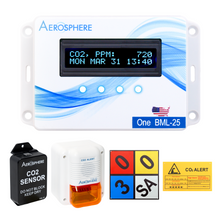
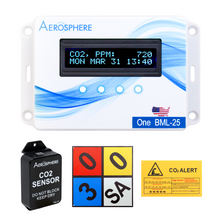
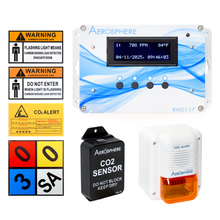
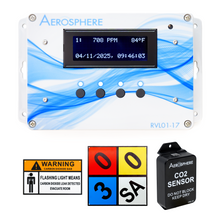
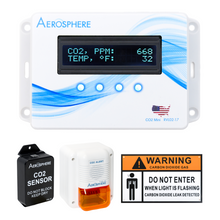
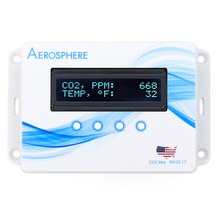
- Monitoring systems are not included or properly designed
- No one is tracking long-term obligations
From an operational standpoint, everything appears complete. In reality, key elements may have never been addressed together.

Why Franchise Locations Are More Exposed
Franchisees operate in a unique position.
You are responsible for multiple locations, but:
- Buildouts may vary by contractor
- Timelines are driven by opening schedules
- Local AHJs enforce codes differently
- System decisions are often made before you are fully involved
This leads to one of the biggest risks in franchise operations: Inconsistency across locations
One store may be fully aligned.
Another may be missing monitoring, permits, or documentation.
Without visibility, these differences are hard to identify until something triggers a review or inspection.
High CO2 Usage Is Easy to Miss
Many franchise locations, especially those with beverage systems, operate near or above regulatory thresholds.
Under the International Fire Code (IFC), compressed gas systems above certain quantities require operational permits and must meet specific requirements for monitoring, storage, and safety (IFC Section 105.3 and Chapter 53).
The challenge is that these thresholds are not always obvious during day-to-day operations. Without evaluating total CO2 volume and system design, franchisees may not realize when additional requirements apply.
This makes CO2 compliance less about intent and more about visibility.
Inconsistent Setups Across Locations
For multi-location operators, CO2 compliance becomes even more difficult to manage.
Different locations may be:
- Built at different times
- Managed by different contractors
- Subject to different local AHJ interpretations
As a result, compliance is often inconsistent across a portfolio.
One location may have proper monitoring and documentation in place, while another may be missing key components entirely. Without a standardized approach, these differences are difficult to identify and manage at scale.
Common Areas Where Compliance Is Overlooked
In Food & Beverage operations, CO2 compliance issues are rarely the result of a single failure. They are typically the result of small oversights that were never addressed together.
Some of the most common areas include:
- Monitoring systems not included during initial installation
- Sensor placement not aligned with how CO2 behaves in enclosed spaces
- Permitting requirements not identified or tracked
- Compliance is only addressed when required
- Ongoing testing and recertification not scheduled (as required under IFC inspection guidelines)
- Documentation not organized or accessible at the location level
Individually, these may seem minor. Together, they create a system that is difficult to manage and verify.
What a Better Approach Looks Like for Franchisees
Franchisees that maintain consistency across locations approach CO2 compliance differently.
Instead of treating it as a one-time task, they:
- Evaluate requirements based on actual CO2 usage
- Ensure monitoring systems are properly designed and placed
- Align permits with current system configurations
- Maintain documentation at each location
- Track ongoing requirements like testing and recertification
This creates a clearer picture of where each location stands and reduces uncertainty over time.

The Shift Toward Standardization
As portfolios grow, many operators are moving toward standardizing CO2 compliance across all locations.
This includes:
- Applying consistent requirements across sites
- Reducing variability in installation and setup
- Maintaining visibility into system status and documentation
- Staying aligned with recurring inspection cycles
Standardization simplifies operations and makes compliance more predictable.
Bringing Consistency Across Your Locations
At Aerosphere, we work with Food & Beverage operators to simplify and standardize CO2 compliance across every location.
From evaluating requirements and system design to permitting, installation, documentation, and ongoing recertification, our approach brings all aspects of compliance into one structured process.
Instead of relying on assumptions or managing multiple vendors, operators gain a clear and consistent understanding of where their locations stand.
Get a Clear Picture of Your CO2 Setup
If you are unsure whether your locations are fully aligned, or want to better understand how CO2 compliance is being managed across your operations, now is the time to take a closer look.
Get a CO2 compliance assessment here to identify what may need attention and bring consistency across your locations.