How a CO2 Beverage System Can Benefit Your Business

From restaurants and convenience stores to stadiums, casinos, theaters, and entertainment venues, CO2 beverage systems make it possible to serve large quantities of carbonated beverages quickly and efficiently.
For businesses currently relying on bottled or canned drinks, switching to a fountain system can offer several advantages. Concentrated syrup requires less storage than finished beverages, drinks can cost less per serving, customers have access to greater variety, and the same beverage infrastructure can support an increasingly diverse drink menu.
As restaurants and other businesses put more emphasis on their beverage programs, those advantages are becoming even more valuable.
Lower Cost Per Serving
One of the biggest advantages of a fountain beverage system is how the final product is produced.
Most commercial fountain systems are post-mix systems. Instead of purchasing a finished beverage in an individual bottle or can, the business receives concentrated syrup, typically in a Bag-in-Box (BIB). The system combines that syrup with water and CO2 at the point of dispense.
A typical post-mix ratio is approximately five parts carbonated water to one part syrup, meaning a five-gallon BIB can produce around 30 gallons of finished beverage.
This can provide a substantial cost advantage over purchasing individually packaged beverages, particularly for businesses serving beverages at high volume.
Actual costs vary based on beverage contracts, cups, ice, CO2, equipment, maintenance, and menu pricing, but fountain beverages have long been attractive to foodservice operators because of their relatively low cost per serving.
Make Better Use of Storage Space
The same post-mix process can also reduce the amount of beverage inventory that needs to be stored.
Instead of storing 30 gallons of finished soda, for example, a business can store concentrated syrup and produce the finished beverage using its water supply and CO2 system.
BIB syrup containers are compact and shelf-stable, making them particularly useful for establishments where back-of-house storage is limited.
For high-volume restaurants, convenience stores, theaters, stadiums, and similar businesses, reducing the space dedicated to cases of bottles and cans can be an important operational advantage.
Serve More Customers and More Choices
Fountain systems are designed for efficient beverage service.
Multiple beverages can be supplied through the same dispensing station, allowing an establishment to offer sodas, sparkling water, flavored beverages, lemonades, and other options without individually stocking every serving.
Self-service fountains can provide another operational advantage by allowing customers to fill and refill their own drinks. In busy environments, this can reduce the amount of employee time dedicated to beverage service.
Modern beverage systems also offer considerably more customization than the traditional fountain.
Flavor additions, specialty syrups, creams, foams, energy products, and other ingredients are allowing businesses to turn a basic carbonated beverage into a premium menu item.
Beverage Programs Are Becoming More Valuable
The beverage category itself is changing.
Restaurants are increasingly offering crafted sodas, refreshers, energy drinks, functional beverages, mocktails, and other premium non-alcoholic options. Rather than treating beverages simply as an addition to a meal, operators are looking at them as their own revenue opportunity.
Sauce describes beverages as a scalable way for restaurants to increase average ticket size without necessarily adding the same labor and kitchen complexity associated with expanding the food menu.
Dirty soda is one example. By combining fountain soda with flavored syrups, creams, foams, and other additions, businesses can create a more customizable and premium product using an existing carbonated beverage as the foundation.
Major restaurant brands are investing in this opportunity as well. McDonald's has expanded into crafted sodas, refreshers, energy beverages, and other specialty drinks, while other major operators are similarly expanding their beverage strategies.
For businesses considering a fountain system, this means the value isn't necessarily limited to serving traditional soda. The system can become infrastructure for a much broader beverage program.

Reduce Reliance on Bottles and Cans
Producing beverages at the point of dispense also means fewer individual bottles and cans are required.
Instead of bringing the water, beverage concentrate, and packaging for every individual serving into the establishment, a post-mix system brings in concentrated syrup and creates the finished drink when it is ordered.
This can reduce the number of individual beverage containers that need to be stored, restocked, handled, and discarded.
Fountain systems still require BIB packaging, cups, lids, and other materials, so they are not packaging-free. However, reducing reliance on individually packaged beverages can simplify inventory and waste handling for businesses serving significant beverage volume.
Don't Overlook CO2 Safety
The benefits of a fountain beverage system depend on something customers rarely see: the CO2 system behind it.
CO2 makes carbonated beverage service possible, but storing and using CO2 also introduces an important safety consideration.
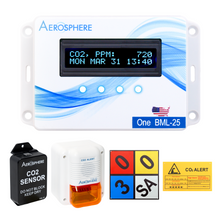
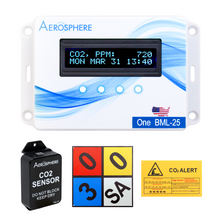
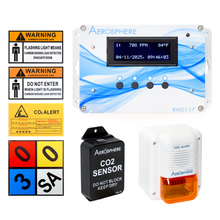
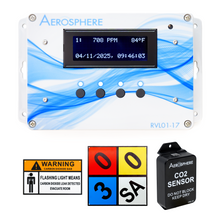
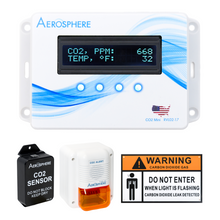
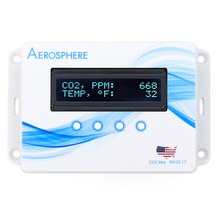
CO2 is colorless and odorless. If a leak occurs, the gas can accumulate without employees or customers realizing it is present. Depending on the size and configuration of the system and local requirements, commercial CO2 installations may require gas detection, audible and visual alarms, emergency shutoff equipment, safety signage, permitting, inspections, and ongoing testing.
That makes CO2 safety an important part of operating a commercial beverage system, not simply an accessory to it.
Building a Better Beverage Program
Switching from bottles and cans to a CO2 fountain system can provide meaningful advantages for the right business: lower cost per serving, more efficient storage, faster high-volume service, greater beverage variety, and more opportunities to develop premium drinks.
And as beverage programs become more important to restaurants and other commercial establishments, the infrastructure supporting them becomes more important as well.
Aerosphere provides CO2 monitoring equipment, permitting, installation, service, and ongoing compliance support for commercial CO2 systems. Whether you're installing a new beverage system or evaluating an existing CO2 setup, our team can help make sure the CO2 side of your operation is designed and maintained with safety and compliance in mind.