How Carbon Dioxide Is Used in Commercial Pools

Commercial swimming pools require careful chemical control to keep the water safe, comfortable, and properly balanced. While chlorine or bromine handles disinfection, carbon dioxide can play an important supporting role by helping regulate pH. In many aquatic facilities, automated CO2 systems provide a controlled way to lower pH and maintain more consistent water chemistry.
CO2 is not a sanitizer, and it does not replace chlorine or bromine. Instead, it works alongside the disinfection system as an alternative to traditional acids used for lowering pH.
Why Commercial Pools Need pH Control
Commercial pool chemistry changes constantly. Swimmers, makeup water, disinfectants, aeration, water features, and circulation can all affect pH, causing it to drift outside the desired range.
When pH is too high, chlorine becomes less effective, scale can form, and the water may turn cloudy. When it is too low, the water can become corrosive and damage metal components, plaster, grout, heaters, and other equipment.
Stable pH also supports swimmer comfort and reduces irritation. For busy hotels, recreation centers, universities, therapy pools, and competition facilities, consistent control is especially important because small chemistry issues can quickly become larger operational problems.
How a CO2 pH-Control System Works
A typical commercial CO2 system stores carbon dioxide in compressed-gas cylinders or a larger bulk container. The gas passes through a pressure regulator and control valve before being introduced into the pool’s recirculation system.
A pH controller continuously receives information from a probe installed in the treatment loop. When the measured pH rises above the programmed setpoint, the controller opens a solenoid valve and allows a controlled amount of CO2 to enter the circulating water. The gas is commonly introduced through an injector, diffuser, or venturi designed to promote efficient mixing.
Once dissolved, some of the CO2 reacts with water to form carbonic acid. This mild acid releases hydrogen ions, which lowers the pH. When the desired setpoint is reached, the controller stops the feed.
The process is automatic, but it is not hands-off. Operators still need to verify water chemistry with manual testing, calibrate the pH probe, inspect the feed equipment, and confirm that safety interlocks are working properly.
Why Facilities Choose CO2 Instead of Mineral Acid
Traditional pH control often relies on muriatic acid, sulfuric acid, or sodium bisulfate. While effective, these products create handling and storage concerns. Spills can damage surfaces and equipment, accidental contact can injure employees, and improper mixing with chlorine products can release dangerous chlorine gas.
CO2 reduces the need to routinely handle concentrated mineral acids, which can be a meaningful operational advantage.
It also behaves differently in the water. Mineral acids lower both pH and total alkalinity, while CO2 primarily lowers pH without directly reducing alkalinity. This is useful when alkalinity is already within the desired range.
Why CO2 Monitoring is Important
Although CO2 is useful for water treatment, it can become hazardous when released into an enclosed space. Carbon dioxide is colorless and odorless, so employees may not immediately recognize that a leak has occurred. Because it is heavier than air, it can also collect near the floor, in equipment rooms, below-grade spaces, and in other areas with limited ventilation.
At elevated concentrations, CO2 can cause headaches, dizziness, confusion, breathing difficulty, loss of consciousness, and other serious health effects. For this reason, commercial facilities must treat the CO2 storage and feed system as more than just a water-chemistry component.
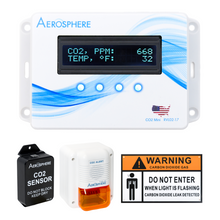
The International Fire Code requires safeguards where carbon dioxide is stored or used in quantities and conditions that could create a dangerous atmosphere. Depending on the amount of CO2 present and the design of the facility, requirements may include:
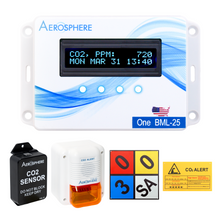
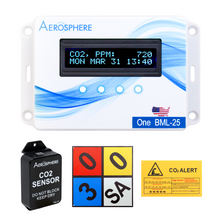
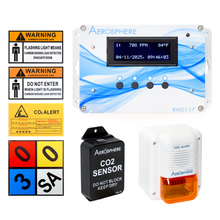
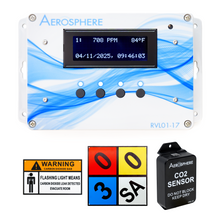
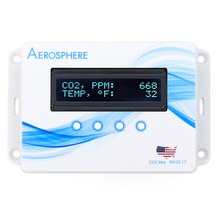
- CO2 detection in storage, dispensing, and potential accumulation areas
- Sensors installed twelve inches from the floor, where leaking CO2 is likely to collect
- Audible and visual alarms
- Warning signage at entrances to affected areas
- Mechanical ventilation or other approved safeguards when necessary
- Automatic emergency shutoff controls
- Properly secured cylinders or storage vessels
- Annual inspection and testing of the detection system
Facilities storing more than 100 pounds of CO2 are also subject to operational permitting and additional fire-code requirements. Because code adoption and enforcement vary by jurisdiction, the local authority having jurisdiction should be consulted before installing or modifying a commercial pool CO2 system.
Integrating Detection With the Pool System
A CO2 monitoring system should be designed around the actual room layout and the locations where gas is stored, regulated, injected, or transferred. A sensor placed too far from the equipment or too high above the floor may not provide timely warning of a leak.
The gas detection system should operate independently from the pool’s pH controller. A pH probe measures conditions in the water, while a CO2 detector measures the concentration of gas in the surrounding air. One cannot replace the other.
When elevated CO2 is detected, the system should provide clear notification so employees and occupants can leave the affected area and follow the facility’s emergency procedures. Depending on the approved system design, an alarm may also need to activate ventilation, or stop the flow of CO2.
Support for CO2 Monitoring and Compliance
Aerosphere provides CO2 monitoring equipment and compliance support for commercial facilities using bulk or cylinder-supplied carbon dioxide. This can include system design assistance, detection equipment, alarms, safety signage, permit drawings, permit submission, installation, inspection coordination, and annual recertification.
Because every facility and fire jurisdiction is different, the goal is to develop a system that reflects the actual equipment layout and the requirements of the applicable authority, rather than relying on a one-size-fits-all approach.
A Useful Tool for Modern Pool Operations
For many commercial pools, CO2 provides an effective way to manage rising pH. It can reduce routine handling of concentrated acids, integrate with automated controls, and provide steady adjustment without directly lowering total alkalinity.
However, using CO2 safely requires more than a regulator and injection line. Proper storage, ventilation, gas detection, alarms, permitting, employee training, and ongoing testing should all be considered part of the system.
When the water-treatment and life-safety components are properly designed and maintained, CO2 can help commercial aquatic facilities achieve consistent water balance while protecting the employees and technicians who work around the equipment every day.