The Step-by-Step Guide to CO2 Compliance for Operators
CO2 compliance should be proactive, documented, and standardized. This step-by-step guide explains how businesses that store bulk CO2 can move from uncertainty to full compliance, covering exposure assessment, permitting, site surveys, inspections, and long-term recertification.

Operators rarely think about CO2 until something forces them to.
An inspection note.
A failed approval.
A last-minute permit issue.
CO2 compliance works best when it is proactive, documented, and standardized. If your business stores bulk CO2 for beverage dispensing, grow operations, food production, or other applications, there is a defined process you need to follow.
This guide breaks down the exact steps to move from uncertainty to full CO2 compliance. This is based on our whitepaper “Health Impacts of CO2 Exposure in the Workplace and the Need for Monitoring Compliance.”
Step 1: Identify Your Need
The first step in CO2 compliance is understanding your actual exposure.
Carbon dioxide is colorless, odorless, and heavier than air, which means it can accumulate at lower levels during a leak. NASA confirms that CO2 concentration is measured in parts per million (PPM), representing the number of CO2 molecules per million molecules of dry air (NASA, https://climate.nasa.gov/vital-signs/carbon-dioxide/).
If your facility stores bulk CO2 or multiple compressed cylinders, you must determine:
- How many pounds are stored on-site?
- Is the storage indoors or outdoors?
- Does your jurisdiction require monitoring above certain thresholds?
- Which code body is enforced by your Authority Having Jurisdiction (AHJ)?
According to the International Fire Code, an operational permit is commonly required for compressed gases stored in excess of certain amounts, often referenced around 100 pounds depending on code and jurisdiction (ICC Digital Codes, https://codes.iccsafe.org/). Many operators exceed these thresholds without realizing it.
At Aerosphere, we begin by confirming your stored volume and determining whether monitoring and permitting requirements apply in your jurisdiction.

Step 2: Contact a Professional
Once you understand your exposure, the next step is bringing in professionals who understand both code enforcement and real-world operations.
A qualified CO2 compliance partner should:
- Understand IFC, NFPA, and local enforcement variations
- Manage drafting and submittal requirements
- Coordinate with the AHJ
- Design a compliant monitoring layout
- Handle inspection scheduling
Too often, operators assume their gas supplier handles compliance. In reality, monitoring, permitting, and inspection coordination are separate responsibilities.
Before moving forward, you should be able to clearly answer:
- What code is enforced at my location?
- Is a permit required?
- What documentation will the inspector request?
- What is the expected timeline?
At Aerosphere, we walk operators through these questions upfront to eliminate surprises later.
Step 3: Start the Process With a Site Survey
Compliance should never be based on guesswork.
A professional site survey allows your team to document:
- Tank location
- Storage configuration
- Room layout
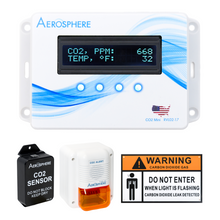
- Sensor placement strategy
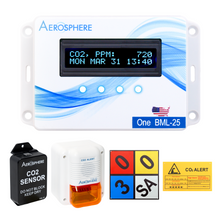
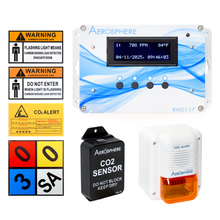
- Horn strobe placement
- Signage requirements
- Floor plan details for permit submission
Starting with a site survey ensures that monitoring equipment is installed correctly the first time and that the system aligns with local enforcement standards. It also prevents costly rework during inspection. For expanding brands or multi-location operators, standardized site surveys help maintain consistency across all facilities.

Step 4: Educate Yourself and Your Team
CO2 monitoring systems are only effective if your team understands how they work.
The Cleveland Clinic explains that excessive CO2 exposure can lead to hypercapnia, which may cause symptoms such as shortness of breath, confusion, fatigue, and in extreme cases, serious health consequences, such as hypercapnia. (Cleveland Clinic, https://my.clevelandclinic.org/health/diseases/24808-hypercapnia).
Your staff does not need to become compliance experts, but they should understand:
- What an alarm indicates
- Where CO2 is stored in the facility
- Who to contact if an alarm activates
- How to document incidents
- Why annual recertification matters
During installation, this is the ideal time to walk managers and key team members through the system so knowledge stays with the operation, even as staff changes. Education reduces confusion and builds operational confidence.
Step 5: Administration, Permitting, and Inspection Coordination
This is where many operators underestimate the process.
Administrative compliance includes:
- Drafting facility plans
- Submitting permit applications to the AHJ
- Addressing corrections or revisions
- Scheduling inspection
- Demonstrating system functionality during review
The International Fire Code Section 5307 addresses carbon dioxide systems used in beverage dispensing applications, outlining storage and monitoring expectations (ICC Digital Codes, https://codes.iccsafe.org/) . After permit approval, installation occurs. Once installed, the system must be inspected and approved by the enforcing authority.
At Aerosphere, we manage both the field work and the administrative coordination so operators are not left juggling multiple vendors during inspection.
When this step is handled properly, inspections move efficiently and openings stay on schedule.

Step 6: Keep Records
Compliance is not only hardware. It is documentation.
You should maintain:
- Approved floor plans
- CO2 permits
- Inspection approvals
- Recertification tags and dates
- Any AHJ correspondence
Organizing these records in both physical and digital formats makes future inspections faster and expansions easier.
For multi-location brands, centralized documentation across all sites significantly reduces friction when ownership changes or new locations open.
Operators who treat documentation seriously avoid last-minute scrambles during inspection.
Step 7: Maintain Compliance With Annual Recertification
CO2 compliance does not end after installation.
Annual recertification verifies that:
- Sensors function properly
- Audible and visual alarms activate correctly
- Documentation is updated
- System performance meets code requirements
Ongoing monitoring and verification are critical because code enforcement continues long after initial approval.
At Aerosphere, we approach compliance as a lifecycle, not a one-time project. We design, permit, install, inspect, and support long-term recertification so operators can stay focused on running their business.